Table of Contents
Hosting a Large Group Mystery Party (100+ Players)
Are you planning a murder mystery party for 100+ players and need epic entertainment that keeps everyone engaged for 2–3 hours? Whether it’s a family reunion, class reunion, wedding shower, or corporate holiday party, a murder mystery is one of the best options to bring big groups together.
Here’s a step-by-step guide to hosting a large group murder mystery party — without losing your mind.
1. Lock in the Venue 🎭
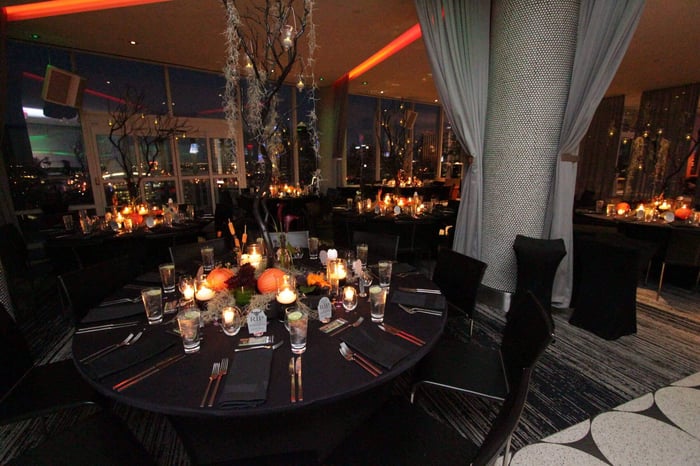
Start with your budget and guest count. A ballroom, banquet hall, or community center works well, but don’t overpay — especially in peak months like June when venues charge wedding-season rates. Hotels often offer free or discounted space if you meet their food & beverage minimum.
💡 Pro Tip: Even modest spaces can feel immersive. A few $1 bags of cobwebs, LED candles, or themed centerpieces can transform any room.
2. Feed the Crowd 🍴
Food is the second most important detail. Hungry guests = cranky guests. Decide upfront: full meal or heavy appetizers?
Snacks only? Make it clear on the invitation so nobody arrives starving.
Budget-friendly meals: Barbecue joints, sandwich platters, or Chick-fil-A nugget trays.
Upscale feel: Local caterers or restaurants often have surprisingly reasonable group menus.
DIY catering? Only attempt if you truly have nothing else to do the day of the event — and get helpers lined up.
Match the menu to the theme whenever possible. A medieval mystery? Rustic bread and roast chicken. A Hollywood mystery? Glam hors d’oeuvres.

3. Nail Down Your Entertainment: Choosing the Right Mystery Party
This is the fun part. Mystery parties practically sell themselves — once people hear you’re hosting one, your guest list will start growing on its own. Everyone loves the idea, and the excitement builds quickly. But when you’re planning for 100+ players, there are a few key things to understand.
Not Everyone Wants the Spotlight, but ~ 99% of People Want to Play
It’s natural to want to be fair and give everyone a unique character role, but with groups this large, that’s not only unnecessary — it’s a mistake. In reality, 40–60% of your guests will not want to be in the limelight. Most people are happier with secondary roles where they can join in without pressure. Unique characters should go to your most outgoing, dependable players; secondary roles will actually be appreciated by the rest. On the flipside, those players who say they'll just watch - about 9/10 times, they'll ask for at least a secondary role once the game begins and they see everyone having a blast. So, if you believe that you've got a portion of players who do not want characters, it's best to have some extra secondary game materials for them, so you can at least put them on a team once they get there and want to play.
Large Groups = Controlled Chaos
Crowds of this size can get overwhelming fast. As the host, your confidence sets the tone. Do not wait until the day of the party to read the instructions — prepare in advance so you know the flow inside and out. If you look uncertain, the crowd will pick up on it, and momentum can slip away.
💡 Pro Tip: Something always goes wrong at large events — maybe the candles don’t get lit, or a centerpiece is out of place. Don’t call attention to it. Guests will never notice unless you make it an issue. Keep your cool publicly; handle meltdowns privately.
Skip the Scripts and Actors
Dinner theater shows with scripts and hired actors may sound tempting, but they aren’t the same as a murder mystery party. Scripts require rehearsals, cost more money, and ultimately leave guests as passive spectators. Fun for the moment? Sure. Memorable after Tuesday? Probably not.
Clue-based, task-driven games are far more successful. Guests get to mingle, accuse, defend, and investigate. This interactive format is what keeps people buzzing long after the night is over — and it’s why mystery parties work so well for groups of any size, especially 100+.
4. Assign Roles Smartly 👥
Put your most outgoing, reliable guests in the required roles (victim, suspects, investigators).
Assign quieter guests as expandable team members. They’ll still play, mingle, and guess the culprit without the stress of performing.
Use the pre-game site (YourMysteryParty.com) to share costume tips and character info, and do the pre-game round with the tasks. It's optional, but with larger games, it becomes important to play the pre-game round, as the more prepared more of the players are before arrival, the better.
5. Manage the Flow of the Event 🕑
Large groups need structure.
Timeline: Plan ~30–45 minutes per round (3 rounds total = 2–2.5 hours). We have an example timeline at www.mymysteryparty.com/timeline Every game has a timeline included with the host instructions - it's mandatory that a host of a large group murder mystery has this timeline with them at all times. This is your key to success. Check off each item as you do it, and you can't go wrong.
Announcements: Use a microphone or PA system to call rounds — otherwise, chaos takes over.
Staff: Have at least 2–3 assistants to help pass out envelopes, keep time, and field questions.
Don't play loud music while players are mingling.
6. Special Considerations for Super-Sized Events (250+ Players) 🎉
Don’t do it alone. Assign co-hosts and assistants.
Color-code name tags (e.g., red team vs. blue team) and run simultaneous games side by side in one space. It can get too difficult to handle too many people in one game, unless it's designed for that (Plaza Ritz, see below).
7. The CEO Format (Plaza Ritz Hotel Game) 🏨
For ballroom or banquet settings, consider Murder at the Plaza Ritz Hotel, designed for 50–300 players.
10 (+) team leaders (CEOs) are unique roles.
Guests are divided into teams of “employees” who report back between mingling and dining courses.
Expansion packs add more CEOs if needed.
This format is perfect for seated dinners where you want mingling and table discussion balanced with courses.
If you are hosting a game for 100+ players and want a game that was 'written' for 100+ players, I have an option for you. The expandable games I discussed above can be played with as little as 8 players and they expand on up to 250. However, if you will be in a ballroom for a formal event and have tables, I have just the game for you.
8. Hosting Like a Pro ✨
Confidence is key. Read your host's instructions before the day of the party. Guests will sense hesitation, and large groups unravel quickly, so the key to ease everyone into the fun is your confidence.
Expect hiccups. Something always goes wrong — just don’t let guests know. Being prepared is key. Large group games aren't something that can be thrown together the day of the party like smaller group games can.
Avoid “scripted” shows - we'll never sell them. Dinner-theater scripts require actors, rehearsals, and they just aren't as fun or intriguing. Many of the players will 'check out' and start looking at phones, chatting, etc., because everyone can't see and sometimes hear what's going on at a dinner theater venue as the actors are mingling. Clue-driven games where you involve every player in the story are more interactive, flexible, and memorable.
Final Word 💡
A murder mystery party for 100+ guests sounds daunting, but with the right game, planning, and logistics, it’s not only doable — it’s unforgettable. Keep guests fed, keep the flow moving, and trust the format. Stick to the host instructions, avoid over-complicating, and focus on fun.