Table of Contents
Why do the color of your murder mystery costumes matter, anyway?
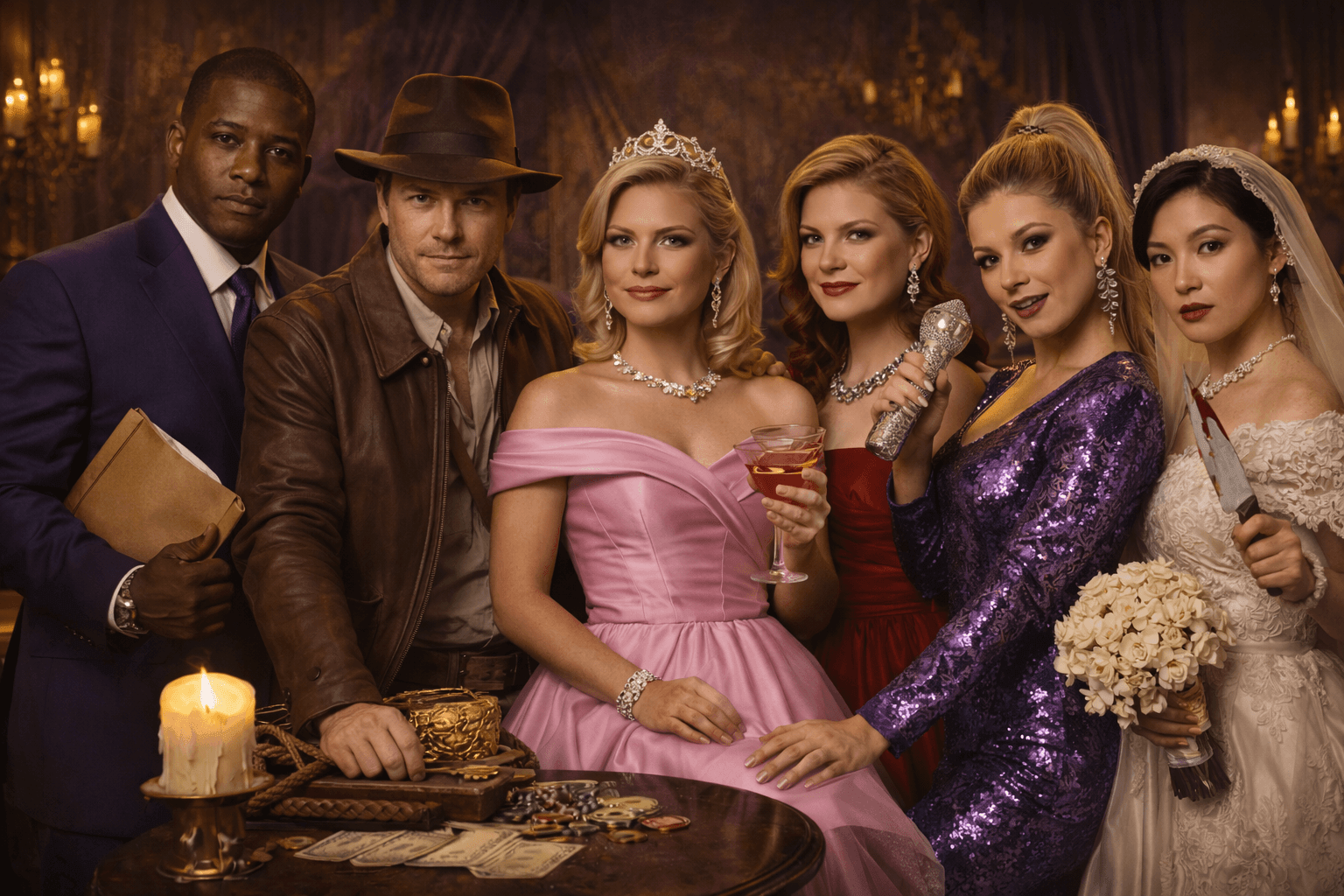
People subconsciously judge your murder mystery party character before you speak. Color does half the acting for you. Knowing color psychology tricks will:
Help non-actors cheat their way into character
Make costumes feel intentional, not random
🧠 The Big Idea
You’re not just wearing a costume. Or, at least you don't have to be.You’re sending signals.
Color affects:
Perceived trustworthiness
Assumed power/status
Whether others think you’re hiding something
Who people suspect first (👀 important)
🎭 Color-by-Color Breakdown
🔴 Red – Power, Passion, Danger
Red is the loudest color in the room, and people instinctively read it as emotional, dangerous, or powerful. At a murder mystery party, red is perfect for characters with strong motives— ambitious heirs, dramatic divas, hot-headed rivals, or anyone driven by jealousy or revenge. Upon sight, red signals intensity and volatility, making other players subconsciously think, “This person could snap.” Wearing red puts a target on your back—in the best possible way—making it ideal for players who want attention, confrontation, or to convincingly sell a motive.
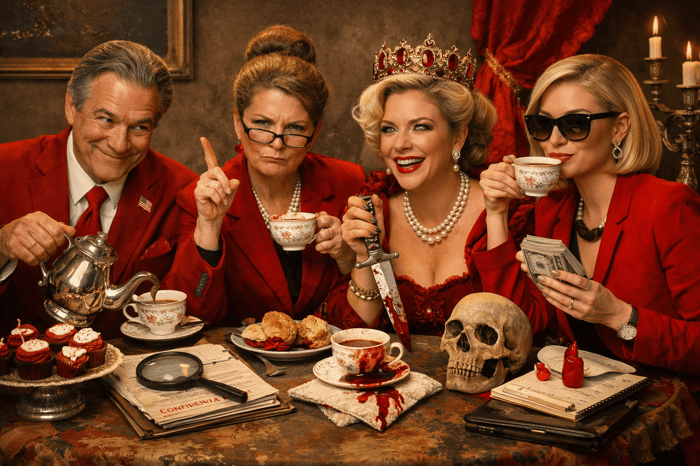
What murder mystery party game players will assume:
- Emotional
- Dominant
- Capable of murder (sorry, red)
Best for:
Power-hungry heirs
Characters with big secrets
People who want suspicion
Costume tips:
Deep red > bright red (reads richer, darker, more sinister)
Pair with black or gold to avoid cartoon villain vibes
⚫ Black – Control, Mystery, Authority
Black communicates secrecy, confidence, and calculation. Characters dressed in black are often assumed to be intelligent, composed, and withholding information. This color works beautifully for masterminds, blackmailers, tycoons, politicians, corporate villains, or icy socialites. At first glance, black tells other players that this character knows more than they’re saying. It doesn’t scream guilt—it whispers it. Black is ideal for players who want to feel powerful, unreadable, and quietly intimidating without drawing chaotic attention.
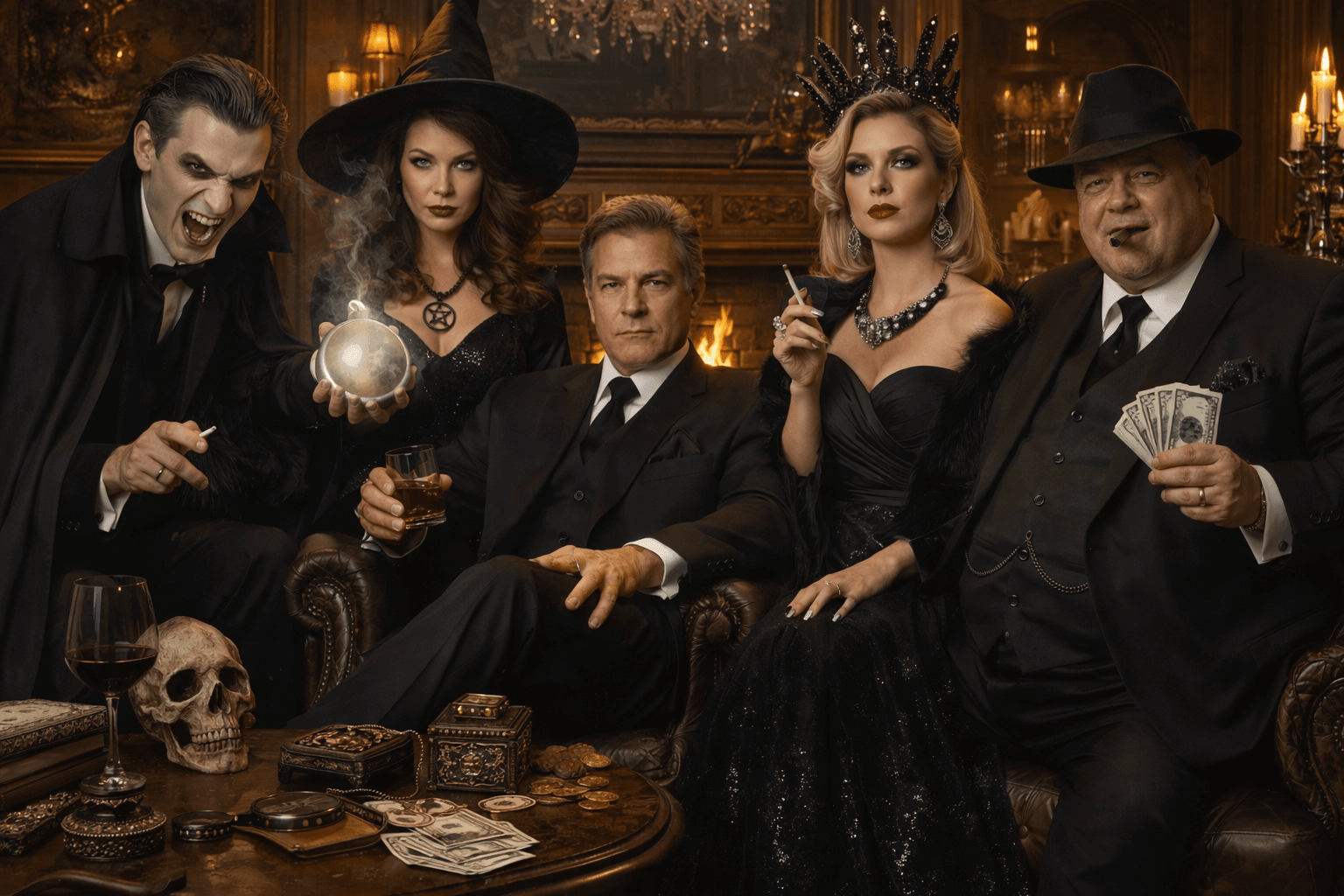
What people assume:
Calculated
Withholding information
Possibly guilty, definitely intense
Best for:
Masterminds
Blackmailers
Corporate villains
The person who “knows too much”
Costume tips:
Texture matters (velvet, leather, satin)
Too much black + no variation = boring shadow blob
🔵 Blue – Trust, Logic, Calm
Blue reads as calm, rational, and dependable, which makes it a strategic choice for detectives, lawyers, doctors, advisors, assistants, or secretly guilty characters trying to blend in. When players see blue, they often assume honesty and emotional stability, thinking, “This person seems reasonable.” That makes blue excellent for avoiding early suspicion or for hiding darker motives behind a composed exterior. Blue helps characters feel grounded and believable—perfect for players who want to manipulate perception subtly rather than dominate the room.

What people assume:
Innocent
Rational
Less emotionally volatile
Best for:
Detectives
Doctors
The secretly guilty character who wants to hide
Costume tips:
Navy reads smarter than bright blue
Add one “off” accessory to avoid looking too clean
⚪ White / Cream – Innocence… or Manipulation
White and ivory instantly suggest purity, elegance, and vulnerability, which makes them incredibly deceptive colors. They’re ideal for brides, victims, socialites, heiresses, or characters who want to appear untouchable or morally above the mess. At first glance, white signals innocence—often causing others to dismiss the wearer as a suspect too quickly. That’s exactly why it works so well for players hiding secrets. In a murder mystery party, white often means “Don’t suspect me”… which is why everyone eventually does.
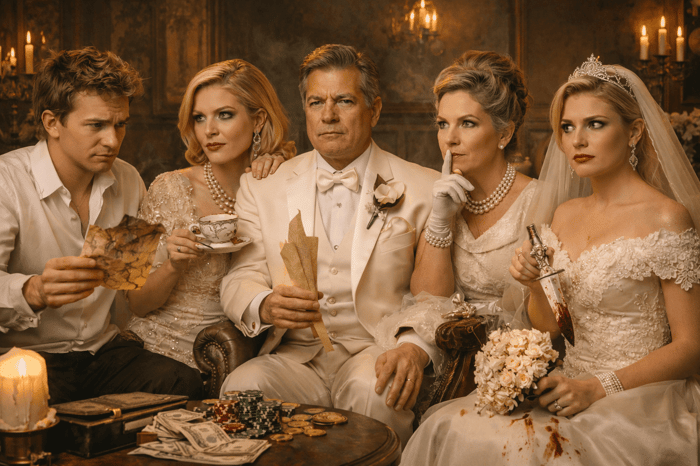
What people assume:
Pure
Naive
Above suspicion
Best for:
Fake innocents
Victims-in-waiting
Characters hiding something dark
Costume tips:
Small stains or imperfections = intrigue
Too crisp = angelic (which can be suspicious)
🟢 Green – Envy, Money, Unease
Green carries strong associations with greed, jealousy, ambition, and financial power. Characters in green are often read as motivated by gain—money, inheritance, status, or opportunity. This color is perfect for schemers, jealous rivals, investors, corrupt officials, or anyone with something to gain from chaos. At first glance, green feels slightly off-balance—not openly villainous, but not fully trustworthy either. It’s an excellent color for subtle antagonists who thrive on quiet manipulation rather than dramatic outbursts.
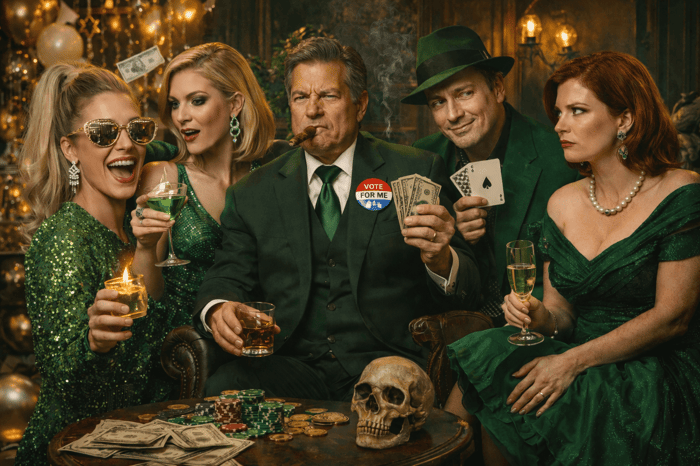
What people assume:
Motivated by gain
Slightly untrustworthy
Emotionally complicated
Best for:
Jealous rivals
Financial schemers
Passive-aggressive characters
Costume tips:
Dark green > neon green
Works beautifully for subtle villains
🟡 Yellow / Gold – Attention, Wealth, Instability
Yellow and gold demand attention and signal wealth, confidence, and showmanship. These colors work best for pop stars, influencers, nouveau-riche tycoons, comic relief characters, or flashy heirs. On sight, people assume these characters are loud, bold, and possibly reckless—or hiding insecurity behind sparkle. Gold in particular reads as power and entitlement, while yellow can feel chaotic or unpredictable. These colors are ideal for players who want to dominate conversations, distract others, or be underestimated as “too obvious” to be dangerous.
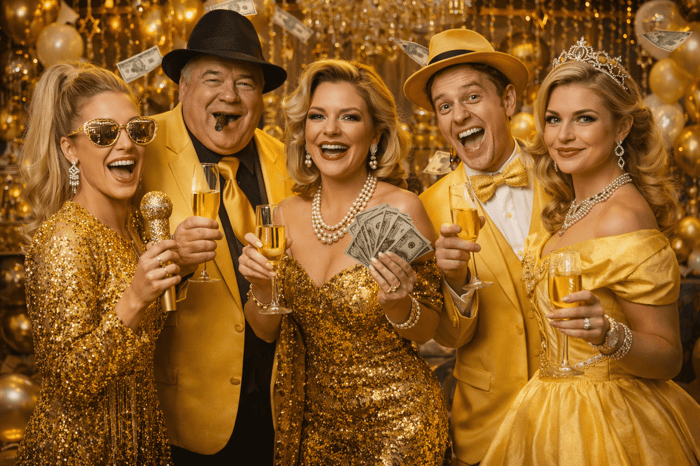
What people assume:
Loud
Flashy
Possibly unhinged
Best for:
Influencers
Nouveau-riche characters
Comic relief with secrets
Costume tips:
Gold reads richer than yellow
Use sparingly unless chaos is your goal
🟣 Purple – Power, Eccentricity, Secrets
Purple blends luxury with mystery, making it the color of eccentrics, royals, mystics, artists, and power players who don’t follow normal rules. Characters in purple are often assumed to be important, intelligent, and a little strange—people sense they have depth and hidden layers. Upon sight, purple says, “This person matters.” It’s perfect for characters with unusual knowledge, long memories, or influence that isn’t immediately obvious. Purple works especially well for players who want intrigue without leaning into overt villain energy.
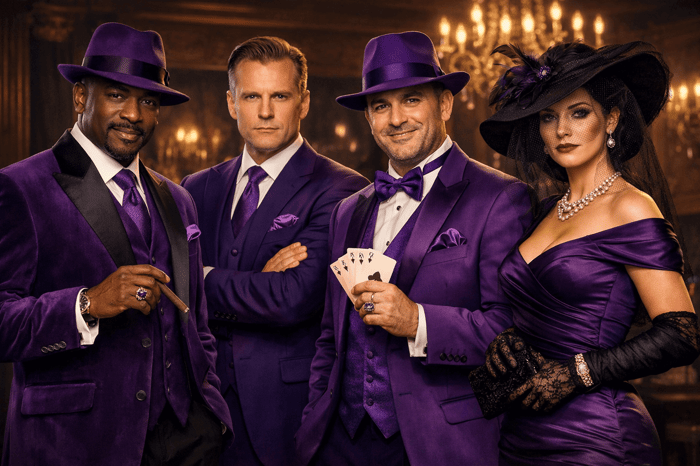
What people assume:
Weird but important
Emotionally layered
Knows something strange
Best for:
Occult types
Eccentric elites
Artistic or mystical roles
Costume tips:
Jewel tones > pastel
Mix with black or silver for authority
🧩 Layering Colors = Layered Characters
Here are some amazing combos of colors to layer the color psychology even further:

Blue + Red: Calm exterior, emotional motives
Black + Gold: Power and entitlement
White + Red: Innocence with a temper
Green + Black: Calculated greed
🕵️ Strategic Advice
When you are assigned to play a murder mystery party character, you aren't told in advance whether you are the victim or the murderer. But you can play your role however you want. If you want to be suspected of murder - whether it's true or not - you can try to look more suspicious! Of, if you want to avoid it, because maybe you will end up being the murderer and you lowkey wanna get away with something if that ends up being the case - then you can use color psychology to help with that, as well. It's all for fun - you won't be able to influence the game, but you could subliminally alter a few votes.
Want suspicion?
Wear red, black, or high-contrast colors.
Want to avoid suspicion?
Stick to blues, neutrals, and softer palettes.
Want confusion?
Dress “against type” (sweet colors, shady behavior).
Hosting tip:
You can subtly guide the game by assigning color vibes to characters. But there's no need to know who the victim and murderer will be - we don't want the colors to actually point these roles out - just to align the color with what should be perceived by each role.
“You don’t need a better alibi.
You might just need a different color jacket.”